
AI video is not a button. It is a way to make scenes you could never film, if you still do the work of a film.
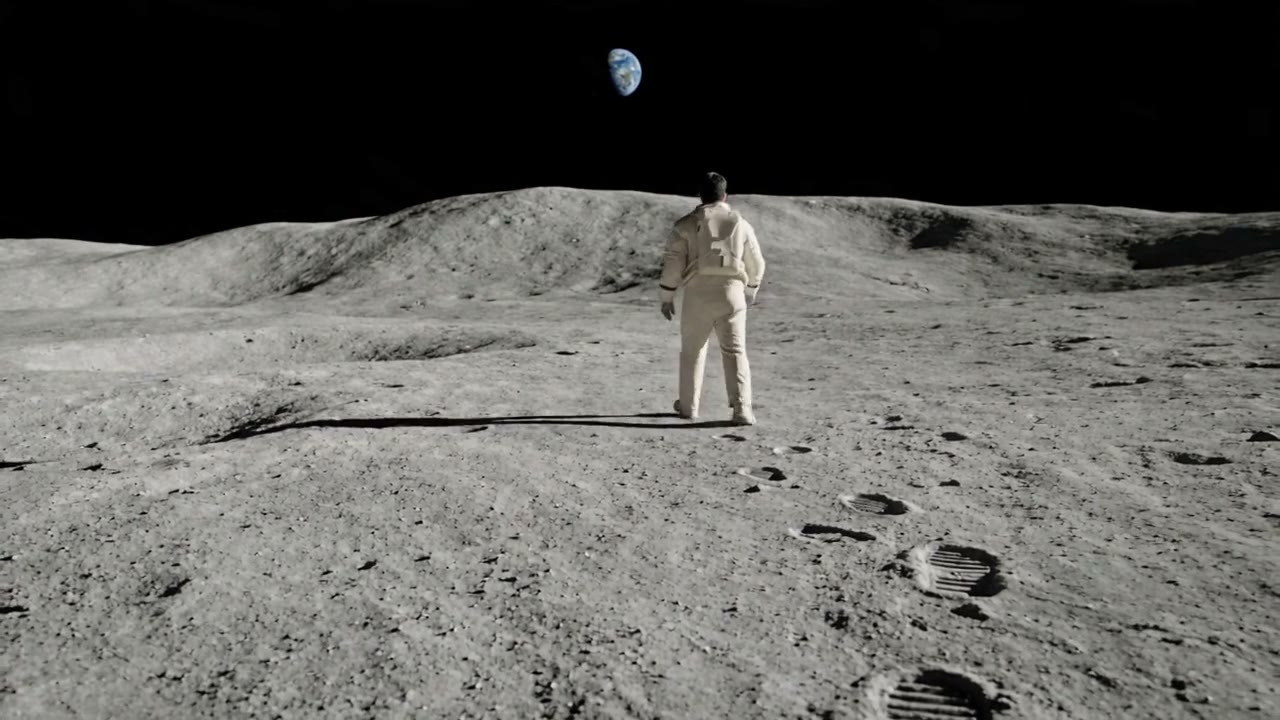
We made a series of six short films for Pixl without a camera, a crew or a location. Lake Como, the Moon, an opera house, a golf course, a mirror chess game, a warehouse. Each one lasts 30 seconds. You can watch all six.
This is what that kind of production is good at for a company, and where it is the wrong tool.
What AI video does well
- Places you cannot go. A wooden boat on Lake Como at the end of the day, footprints on the Moon with Earth in the distance. No travel, no permits, no weather.
- A mood. Black and white for the tension of a full opera house. Late light for calm. The mood carries the idea more than any sentence.
- A recurring character. The same person appears across all six films, which is what makes them read as one series and not six random clips.
- Short lines on screen. One sentence, then silence. "How far would you go?" ends the Moon film. Text added in the edit stays sharp and on brand.
- Formats. A 16:9 master and vertical cuts for social come from the same material.
Where a real shoot still wins
- Your real team and premises. If people need to recognise your office, your workshop or your colleagues, film them.
- A customer testimonial. A real person saying something true about you cannot be generated. It should not be.
- Your exact product. Close-ups where every detail must match the real object are safer with real footage or product photos as a starting point.
- Long dialogue. Short voice-over works well. Long scenes of people talking to camera belong to a shoot.
How a short film gets made
The idea comes first, not the tool.
1. The idea. What should people feel, and what should they remember? One sentence.
2. The script. Thirty seconds is about six decisions. Write them down in order.
3. A light storyboard. One line per shot: what happens and how it is framed. This is where you react, before anything is produced.
4. The images. Each shot is generated in one consistent style, so the film looks like one piece. We described this step in a video is a storyboard first.
5. Motion, voice and edit. Shots come to life, a voice is added if the film needs one, then the edit, titles and subtitles.
6. Exports. The formats of your channels, and tracked links so you can see where views and contacts come from.
Most of the quality is decided in steps 1 to 3. A weak idea stays weak, however good the images are.
What to watch for
- Consent. Only put a real person on screen with their agreement. In our films, the person on screen is our founder.
- Disclosure. Say how the film was made. On our page, the films are labelled as made for Pixl.
- Brand details. Logos and readable text are best added in the edit, not inside generated images.
- Iteration. Some scenes need several passes before they look right. Plan for feedback rounds, not a single take.
Is it right for your company?
It is a good fit when your film carries an idea: a launch, a new offer, a campaign, a mood you want people to remember. It is the wrong fit when the film must prove something with real people.
If you are not sure, tell us what you have in mind. A first 30-second film starts at 400 euros excluding VAT, and we will tell you honestly if a shoot would serve you better. For price comparisons with classic production, see what a short brand film costs.